



Emerging Trends in STEM: The Intersection of Engineering, Technology, and Applied Sciences
Science, technology, engineering, and mathematics (STEM) are transforming the modern world at an unprecedented pace. From artificial intelligence and robotics to renewable energy and advanced materials, technological developments are creating new opportunities to solve complex problems and improve everyday life.
Today, many of the most important innovations are happening at the intersection of different scientific and engineering disciplines. Computer scientists are working with medical researchers to develop intelligent healthcare systems, engineers are collaborating with environmental scientists to create sustainable technologies, and mathematicians are helping researchers build advanced predictive models.
This multidisciplinary approach is becoming increasingly important as industries and research institutions face challenges that require knowledge from multiple fields.
For students, researchers, engineers, academicians, and STEM professionals, understanding emerging trends is essential for staying informed and identifying future research opportunities.
In this article, we explore some of the most important emerging trends in STEM, examine how engineering and applied sciences are evolving, and discuss the role of multidisciplinary research in shaping future innovation.
1. The Growing Importance of Multidisciplinary STEM Research
Traditional academic disciplines often focus on specific areas of knowledge. However, many modern scientific challenges cannot be addressed through a single discipline.
For example, developing an autonomous vehicle requires expertise in mechanical engineering, electrical engineering, computer science, artificial intelligence, control systems, and data processing.
Similarly, improving renewable energy systems involves knowledge of materials science, environmental engineering, electronics, mathematics, and energy management.
Multidisciplinary STEM research brings together researchers with different areas of expertise to investigate complex problems and develop practical solutions.
Some major benefits include:
Innovation Through Collaboration: Combining different research perspectives can generate new ideas and technological approaches.
Improved Problem-Solving: Complex engineering and scientific challenges can be investigated using methods from multiple disciplines.
Practical Applications: Collaborative research can help transform theoretical discoveries into useful products, systems, and technologies.
Knowledge Exchange: Researchers gain exposure to new methodologies, tools, and developments outside their primary areas of expertise.
Industry Advancement: Multidisciplinary research supports innovation across healthcare, manufacturing, transportation, agriculture, energy, and communication.
As scientific and technological challenges become more interconnected, collaboration between STEM disciplines will continue to play an important role.
2. Artificial Intelligence and Machine Learning
Artificial intelligence (AI) and machine learning (ML) are among the most influential developments in modern science and technology.
These technologies enable computer systems to analyse information, identify patterns, make predictions, and perform tasks that traditionally require human intelligence.
AI is increasingly being integrated into scientific research, engineering applications, industrial systems, and everyday technologies.
AI in Scientific Research
Researchers use AI-powered tools to analyse large datasets, identify patterns, process scientific images, and support computational modelling.
In areas such as biology, chemistry, physics, and medicine, machine learning can help investigate complex relationships that may be difficult to identify through traditional analytical methods.
AI in Engineering
AI applications are also transforming engineering processes.
Examples include:
- Predictive maintenance in industrial equipment.
- Intelligent traffic management systems.
- Automated quality inspection in manufacturing.
- Energy consumption forecasting.
- Robotics and autonomous systems.
- Smart building management.
Future Research Opportunities
Important research areas include explainable AI, trustworthy machine learning, responsible AI development, data privacy, model efficiency, and AI-assisted scientific discovery.
Researchers must also consider the limitations of AI systems, including data quality, algorithmic bias, security, and reliability.
3. Robotics and Industrial Automation
Robotics and automation are changing the way industries manufacture products, manage operations, and perform complex tasks.
Modern robots are increasingly capable of working alongside humans, handling repetitive operations, and performing tasks that require precision and consistency.
Industrial automation combines mechanical systems, electronics, sensors, software, control engineering, and artificial intelligence.
Applications of Robotics
Manufacturing: Industrial robots are used for welding, assembly, packaging, painting, and material handling.
Healthcare: Robotic technologies support surgical procedures, rehabilitation, laboratory automation, and patient assistance.
Agriculture: Automated systems can assist with crop monitoring, planting, harvesting, and precision farming.
Space Exploration: Robotic systems help explore environments that are difficult or dangerous for humans to access.
Emerging Research Areas
Researchers are exploring collaborative robots, autonomous navigation, soft robotics, human-robot interaction, advanced sensors, and intelligent control systems.
The combination of robotics and AI is expected to create further opportunities for automation across multiple industries.
4. Renewable Energy and Sustainable Engineering
Climate change, increasing energy demand, and environmental concerns have made sustainable engineering an important area of scientific research.
Renewable energy technologies offer alternatives to conventional fossil fuel-based energy systems and are becoming increasingly important in global energy planning.
Major renewable energy research areas include:
Solar Energy
Solar photovoltaic technologies convert sunlight into electricity.
Researchers are working to improve solar panel efficiency, develop advanced photovoltaic materials, reduce manufacturing costs, and improve energy storage integration.
Wind Energy
Wind power systems use turbines to convert wind energy into electricity.
Research focuses on turbine efficiency, offshore wind technology, aerodynamic design, and improved energy forecasting.
Energy Storage
Energy storage technologies help manage the difference between electricity generation and consumption.
Battery technologies, hydrogen storage, thermal storage, and advanced grid systems are important research areas.
Smart Energy Systems
Smart grids combine digital communication, sensors, automation, and data analytics to improve electricity distribution and energy management.
These developments create opportunities for researchers in electrical engineering, materials science, environmental engineering, and computer science.
5. Biotechnology and Healthcare Innovation
Biotechnology combines biological sciences with engineering and technological methods to develop applications in healthcare, agriculture, pharmaceuticals, and environmental management.
Recent developments in biotechnology are creating new opportunities for scientific research and interdisciplinary collaboration.
Precision Medicine
Precision medicine uses genetic, clinical, and other patient-related information to support more personalised healthcare decisions.
Researchers are investigating how advanced data analysis and biological information can contribute to improved diagnosis and treatment strategies.
Bioinformatics
Bioinformatics combines biology, computer science, mathematics, and statistics to analyse biological data.
It plays an important role in genomics, molecular biology, drug discovery, and computational biology.
Medical Devices and Biomedical Engineering
Biomedical engineering integrates engineering principles with medical sciences to develop diagnostic equipment, prosthetics, medical imaging systems, and assistive technologies.
AI in Healthcare
Artificial intelligence is being explored for medical image analysis, clinical decision support, health data management, and drug discovery.
These developments demonstrate how collaboration between engineering, computing, and life sciences can support healthcare innovation.
6. Advanced Materials and Nanotechnology
Advanced materials and nanotechnology are important research areas with applications across electronics, healthcare, energy, aerospace, construction, and manufacturing.
Nanotechnology focuses on understanding and manipulating materials at extremely small scales, where unique physical, chemical, and biological properties may emerge.
Researchers are investigating materials that offer improved strength, conductivity, durability, flexibility, and energy efficiency.
Important research developments include:
Nanomaterials: Materials engineered at the nanoscale for applications in electronics, sensors, medicine, and energy systems.
Smart Materials: Materials that respond to external conditions such as temperature, pressure, electric fields, or mechanical stress.
Biodegradable Materials: Materials designed to break down under suitable environmental conditions, supporting research into sustainable products and packaging.
Advanced Composites: Engineered combinations of materials that can offer useful mechanical and physical properties for aerospace, automotive, and construction applications.
Semiconductor Materials: Advanced materials used in electronic devices, sensors, computing systems, and communication technologies.
As manufacturing technologies improve, advanced materials research will remain important for developing next-generation products and engineering systems.
7. Quantum Computing and Next-Generation Technologies
Quantum computing is an emerging field that applies principles of quantum mechanics to information processing.
Unlike classical computers, which use bits represented as either zero or one, quantum computers use quantum bits, or qubits, that can represent quantum states involving superposition.
Quantum computing is still developing, and practical applications remain limited by technical challenges such as noise, error correction, and hardware scalability.
However, researchers are exploring its potential in areas such as:
- Molecular and material simulation.
- Optimisation problems.
- Quantum chemistry.
- Cryptography research.
- Scientific modelling.
- Certain specialised computational problems.
Quantum technologies also include quantum communication and quantum sensing.
These fields require collaboration between physics, mathematics, electrical engineering, materials science, and computer science.
8. Internet of Things and Smart Infrastructure
The Internet of Things (IoT) refers to interconnected physical devices equipped with sensors, software, and communication technologies that allow them to collect and exchange information.
IoT is becoming increasingly important in smart cities, industrial automation, healthcare monitoring, agriculture, and infrastructure management.
Smart Cities
Connected sensors and digital systems can support traffic monitoring, energy management, waste management, and environmental monitoring.
Smart Agriculture
IoT-based systems can monitor soil moisture, temperature, humidity, and other environmental conditions to support precision farming.
Industrial IoT
Industrial IoT connects machines, sensors, and software platforms to monitor production systems and improve operational efficiency.
Connected Healthcare
Wearable devices and remote monitoring systems can collect health-related information and support healthcare professionals in monitoring patients.
Research in IoT also involves important challenges related to cybersecurity, privacy, interoperability, communication networks, and data management.
9. Sustainable Construction and Green Engineering
The construction and infrastructure sectors are increasingly exploring technologies and practices that reduce environmental impact while improving building performance.
Green engineering focuses on developing systems, materials, and processes that use resources efficiently and minimise waste.
Some important research areas include:
Energy-Efficient Buildings: Developing buildings that require less energy for heating, cooling, lighting, and other operations.
Sustainable Construction Materials: Investigating recycled materials, low-carbon concrete, and alternative building materials.
Smart Building Systems: Integrating sensors, automation, and intelligent energy management technologies.
Water Management: Developing efficient water treatment, recycling, and conservation systems.
Life-Cycle Assessment: Evaluating the environmental impact of materials and products throughout their life cycle.
Civil engineers, environmental scientists, architects, and materials researchers play important roles in advancing sustainable infrastructure.
10. The Role of International Research Collaboration in STEM Innovation
Emerging scientific and technological challenges often require knowledge, resources, and expertise from different countries and research institutions.
International research collaboration provides opportunities for scientists, engineers, and academicians to exchange ideas, share research findings, and develop solutions to global challenges.
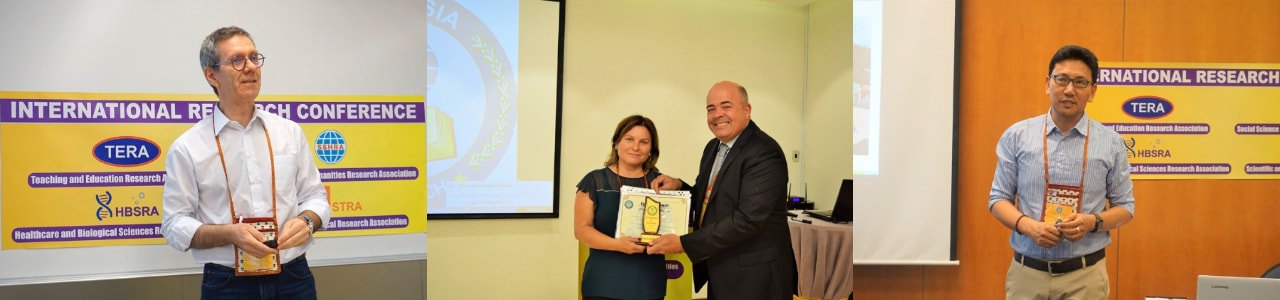
International conferences are important platforms for this knowledge exchange.
They allow researchers to:
- Present original research to an international audience.
- Discuss emerging scientific developments.
- Receive feedback from experienced researchers.
- Discover new research methodologies.
- Build academic and professional networks.
- Explore joint research and publication opportunities.
- Identify potential institutional collaborations.
For early-career researchers, these interactions can provide valuable exposure to different research environments and academic perspectives.
The Scientific and Technical Research Association (STRA) provides a platform for researchers and professionals to explore international science and technology conferences and participate in academic discussions across different disciplines.
Through such academic platforms, researchers can share their findings, learn from experts, and become more connected with the global scientific community.
Conclusion
The future of science, engineering, and technology will increasingly depend on collaboration between different research disciplines.
Artificial intelligence, robotics, renewable energy, biotechnology, advanced materials, quantum computing, and smart infrastructure are among the important areas shaping modern STEM research.
These developments are not isolated technological trends. They demonstrate how knowledge from multiple disciplines can be combined to address complex scientific, environmental, industrial, and societal challenges.
For students, researchers, engineers, and academicians, understanding these emerging trends is essential for identifying new research opportunities and staying informed about technological developments.
Participating in international conferences, engaging in multidisciplinary research, and collaborating with professionals from different backgrounds can help researchers expand their knowledge and contribute to innovation.
Through platforms such as the Scientific and Technical Research Association (STRA), researchers can explore international academic events, exchange ideas, and connect with the wider scientific and technological research community.
The next generation of scientific breakthroughs will depend not only on individual discoveries but also on the ability of researchers to collaborate, innovate, and turn knowledge into meaningful real-world solutions.
Frequently Asked Questions (FAQs)
1. What are the latest emerging trends in STEM?
Important emerging STEM trends include artificial intelligence, machine learning, robotics, renewable energy, biotechnology, nanotechnology, quantum computing, Internet of Things, and sustainable engineering.
2. Why is multidisciplinary research important in STEM?
Multidisciplinary research combines knowledge from different academic fields to solve complex problems, encourage innovation, and develop practical technological solutions.
3. How is artificial intelligence changing scientific research?
AI helps researchers analyse large datasets, identify patterns, develop predictive models, process scientific images, and support computational experiments across multiple disciplines.
4. What are the major research areas in renewable energy?
Major renewable energy research areas include solar power, wind energy, battery storage, hydrogen technology, smart grids, and energy-efficient systems.
5. What is the role of robotics in modern engineering?
Robotics supports industrial automation, manufacturing, healthcare, agriculture, logistics, and space exploration through automated and intelligent mechanical systems.
6. What is the difference between biotechnology and bioinformatics?
Biotechnology applies biological systems and processes to develop useful products and technologies, while bioinformatics uses computational and statistical tools to analyse biological information.
7. Why is nanotechnology important in STEM research?
Nanotechnology enables researchers to study and develop materials and systems at extremely small scales, creating opportunities in medicine, electronics, energy, and advanced manufacturing.
8. What are the benefits of international STEM conferences?
International STEM conferences allow researchers to present their findings, receive expert feedback, learn about emerging developments, and establish global academic collaborations.
9. What skills are important for future STEM researchers?
Important skills include critical thinking, scientific communication, data analysis, programming, problem-solving, interdisciplinary collaboration, and research methodology.
10. How can researchers stay updated with emerging STEM developments?
Researchers can read scientific journals, follow academic publications, attend international conferences, participate in workshops, join research communities, and collaborate with experts in their fields.
